

-
-
Products
-
PRODUCTS CENTER

Product Description
Foamed Insulation Sandwich Panel Production Line
This production line consists primarily of a laminating press and a high-pressure foaming machine, and is mainly used for manufacturing sandwich panels. The laminating press comprises a frame and a carrier platen; its mold-closing mechanism is hydraulically driven. The carrier platen is heated by a water‑based mold temperature controller to maintain a thermal conditioning temperature of 40°C, and the entire unit can be tilted between 0° and 5°. To facilitate loading and unloading operations, the upper and lower platens can automatically enter and exit the laminating press, while the return‑travel platen enables alternating production cycles, thereby enhancing overall productivity.
Basic structure and operating principle of a high-pressure foam machine:
The liquid polyol and isocyanate are stored separately in two feed tanks. Two rotary axial‑piston (or radial‑piston) metering pumps deliver the raw materials to the mixing head. When the mixing head opens under hydraulic pressure, the two components are injected into a small mixing chamber at high pressure and flow rate, where they collide and achieve thorough blending through energy conversion, before exiting the mixing head and entering the mold cavity. At the end of the injection cycle, the mixing head’s piston rod advances, forcing all material out of the mixing chamber while simultaneously cleaning the chamber walls, leaving no residual material behind. The components then return to the feed tanks via return channels on either side of the piston rod. If injection is suspended for an extended period, a high‑/low‑pressure switching device directs both components into the low‑pressure circuit.
Due to its precise metering, minimal material loss, and the elimination of solvent‑based cleaning, this equipment promotes environmental protection and reduces raw material costs, thereby gaining increasingly widespread adoption across various industries.
Cold Storage Panel Series
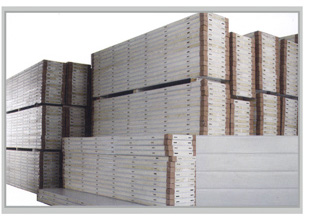
Color‑steel sandwich panels use high‑performance polyurethane as the core insulation material, with color‑steel sheets forming the outer layers. This design effectively reduces heat transfer caused by temperature differences between the interior and exterior, maximizing the efficiency of refrigeration and cold‑storage systems. With a scientifically engineered, simple, and practical structure, it is a cutting‑edge insulation solution that helps reduce construction costs. Available thicknesses: 50, 75, 100, 120, 150, 180, 200, and 250 mm.
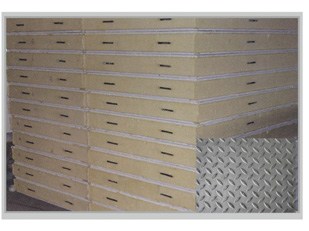
Patterned steel panel: Featuring polyurethane with excellent thermal insulation as the core material and a sandwich‑type panel clad with patterned steel on both sides, this design minimizes heat transfer caused by temperature differentials between the interior and exterior, thereby maximizing the efficiency of refrigeration and cold storage systems. The 4 mm patterned steel bonded to the PU layer eliminates the need for separate structural load‑bearing elements and vapor‑barrier/ moisture‑proof layers. It can withstand forklift traffic. Available thicknesses: 100, 120, 150, 180, 200, and 250 mm.
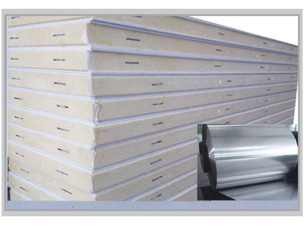
Stainless steel panel: Featuring polyurethane with excellent thermal insulation as the core material and stainless steel panels on both sides, this sandwich‑type panel minimizes heat transfer caused by temperature differentials between the interior and exterior, thereby maximizing the efficiency of refrigeration and cold storage systems. Available thicknesses: 100, 120, 150, 180, 200, and 250 mm.
Cold storage panel thickness
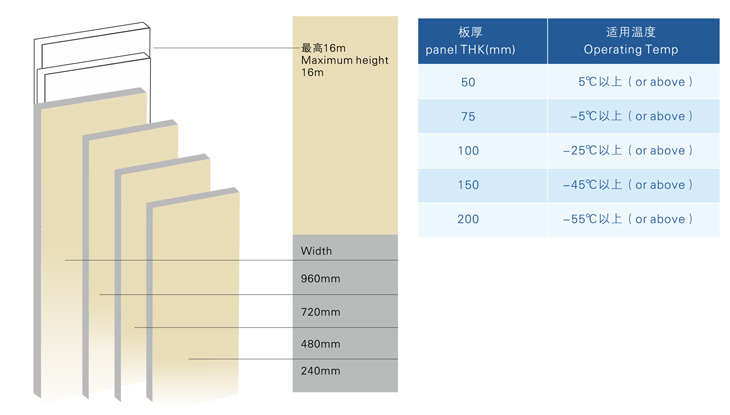
Standard Dimensions and Product Overview of Cold Storage Panels

Flat-sided storage panel
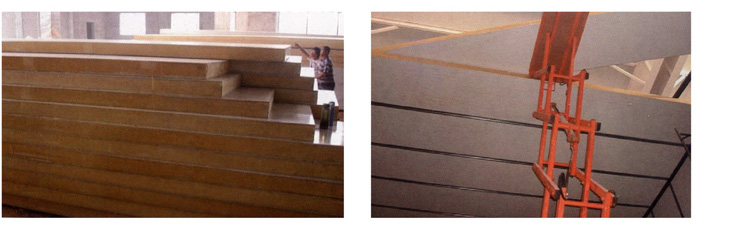
The perimeter of the panel is finished with a flush‑mounted design (for specialized controlled‑atmosphere and low‑temperature freezer panels). The panels are directly locked together using locking strips, with polyurethane foam injected in the joints to eliminate thermal bridges, followed by the application of an airtight sealant.
Standard width: 960 mm–1160 mm, customizable
Board length: 1 m–12 m
Detailed Explanation of Modular Panel Systems

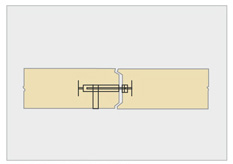
Corner connection (with eccentric joint) Planar connection (with eccentric joint)

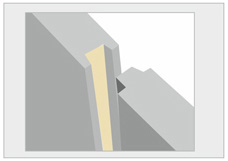
Bayonet-type connection (non-eccentric design) Bayonet-type connection (non-eccentric design)
Precautions for Installing Cold Storage Panels
Plate-Type Cold Storage Installation – Key Point Control
“Thermal bridge” interruption
In addition to ensuring that the insulation thickness complies with regulations, it is crucial to eliminate thermal bridges—caused by improper connections in steel plates, building structures, equipment piping, and supports penetrating insulated sandwich panels. Reducing these external heat losses can lower operating costs; more importantly, it helps meet the process requirements of food refrigeration and cold‑processing systems for minimizing temperature fluctuations, thereby reducing product dry‑weight loss and preserving food quality. Achieving this goal hinges on implementing sound, reliable detailing at all joints and connections.
“Steam bridge” blockage
After the cold storage room is cooled, the gas volume within the insulation layer contracts, and the water vapor contained in the air migrates from the high-pressure side to the low-pressure side, creating a pressure differential between the inside and outside of the insulation. Under pressure, water vapor can permeate through the microscopic barriers of the insulation and diffuse into the interior, where both temperature and pressure are lower.
After water vapor condenses, it turns into liquid; if the temperature drops further, the liquid freezes into ice. When the insulation layer—whether in the form of foam, wood, or ice—is compromised, its insulating performance deteriorates, adversely affecting the overall operation of the cold storage facility and shortening its service life. In contrast to “thermal bridges,” “vapor bridges” are often overlooked. During panel installation, it is essential to eliminate all vapor bridges to minimize the penetration of water vapor into the insulating foam.
Strength requirements
Cold rooms experience significant temperature differences between the interior and exterior. For buildings where refrigeration equipment operates continuously, the fixing methods and structural detailing of sandwich panels must be designed to withstand the most severe combinations of external loads. These primarily include:
● External loads on the enclosure wall panels and top slab
■Thermal buckling of the core panel’s inner and outer surface materials caused by temperature differences
● Pressure changes caused by temperature fluctuations inside the tank
■Surface contamination of sandwich panels. Damage caused by corrosion and external impacts. Compressive strength and long-term deformation under load of the insulation layer in cold storage floor slabs—sandwich panels are subject to residual stresses arising during material selection, manufacturing, and installation.
Security Requirements
Cold storage facilities are both structures and long‑term operating “equipment,” and they harbor numerous safety hazards. They must be given due attention.
■Foam Flame-Retardant Performance and Cold Storage Fire-Protection Measures
■Firewall installation and thermal insulation for large cold storage facilities. Emergency exit door installation.
■ In the event of an unexpected power outage, emergency exit route signage and a dedicated door‑opening mechanism inside the storage room are provided.
■Pressure-balancing device to prevent “tank overflow”
■ Anti-collision measures for cold storage doors and wall panels; frost-protection measures for the floor; safety and risk-reduction procedures prior to commissioning the cold storage facility.
Clean Decoration
■Plow-type joint for sandwich panels and selection of surface materials
■Wall panels and flooring. Joint detailing for ceiling panels.
■ Detail of wall panel corners, columns, and clean joints for doors and windows
■ Floor Surface Treatment
Energy-saving measures
Selection of Appropriate Dimensions for Cold Storage Doors
■Between the weir and the spillway. A passageway. Energy-saving considerations for enclosed platforms.
■ Air intake opening reserved for the coverall
■ Heat-extraction device between the ceiling and the facade
Fluorinated refrigeration unit
Product Features:
The system primarily employs Bitzer refrigeration compressors from Germany, ensuring superior quality and high reliability. Multiple compressors are connected in parallel, sharing a common discharge manifold, suction manifold, condenser, receiver, and other components to form an integrated refrigeration cycle. This configuration delivers substantial cooling capacity and facilitates centralized control. The unit features a compact design, enabling space‑efficient installation with a minimal footprint. It supports multi‑stage capacity modulation in response to varying cooling loads, effectively reducing operating costs, while minimizing the impact of equipment failures on system performance and enhancing overall operational reliability.
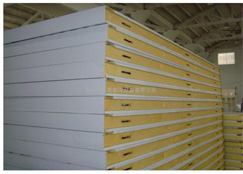
Modular cold storage panel

Refrigerated warehouse electric door


Fluorinated refrigeration unit Controlled-atmosphere storage facility
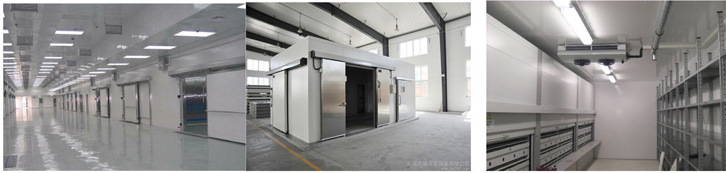
Refrigerated storage room
Add: Chaoyang 1st Road, East 1st District, Shangyu economic and Technological Development Zone, Hangzhou Bay, Zhejiang Province
©2022 Zhejiang Ganshi Refrigeration Equipment Co.,Ltd All rights reserved. 浙ICP备2020042699号-1 Powered by www.300.cn SEO